My Life, My Death, My Choice? Why Not
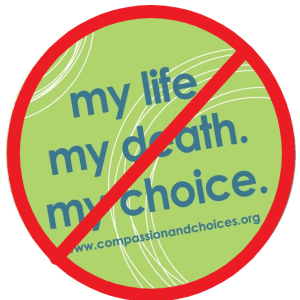
Assessing the Slogans:
“My life, my death, my choice” has been a slogan popularized by supporters of assisted suicide and euthanasia. The slogan bases itself for plausibility on two principals:
- The personal ownership principal. People own their bodies. Since bodies are part of a person’s property, then people should have the right to dispose of their bodies as they see fit.
- The personal autonomy principal: We should respect others’ choices. People have the right to self-autonomy, the right to make morally significant choices about their lives. Hence, they should also have the right to choose the manner and timing of their deaths.
The Problems with Appeals to Personal Ownership:
- The “my” in “my life” is vague. Simply saying “my life” does not imply that I own my life anymore than saying “my wife,” or “my son” implies that I own my wife or son.
- The concept of self-ownership is odd. My body is not my mere property, it is a seamless part of me. For something to be my property, it would have to be able to be separated from me and transferred to others. My body cannot be.
- Since “myself” and “my life” are not separable, how can I be said to “own” my life?
- If my body is merely, my property, then odd conclusions follow. The government can coercively take my property in taxation. If my body is my property, could the government coercively take one of my kidneys as a form of taxation?
The Problems with Appeals to Personal Autonomy
- We are obligated out of respect for the natural good of life to avoid intentionally killing an innocent person.
- Mere consent alone does not justify killing an innocent person. Otherwise things like Russian roulette and dueling would be moral if both parties consented. If a suicidal teenager consented, it would make killing the suicidal teenager right.
- Those who request suicide are often acting from feelings of fear, desperation, guilt, feelings of worthlessness, and isolation. Such persons need moral autonomy is compromised. They need help, love, and commitment, not to be killed.
 Stop Assisted Suicide NY